What Does Due Diligence Actually Look Like Before You Buy Industrial Land?
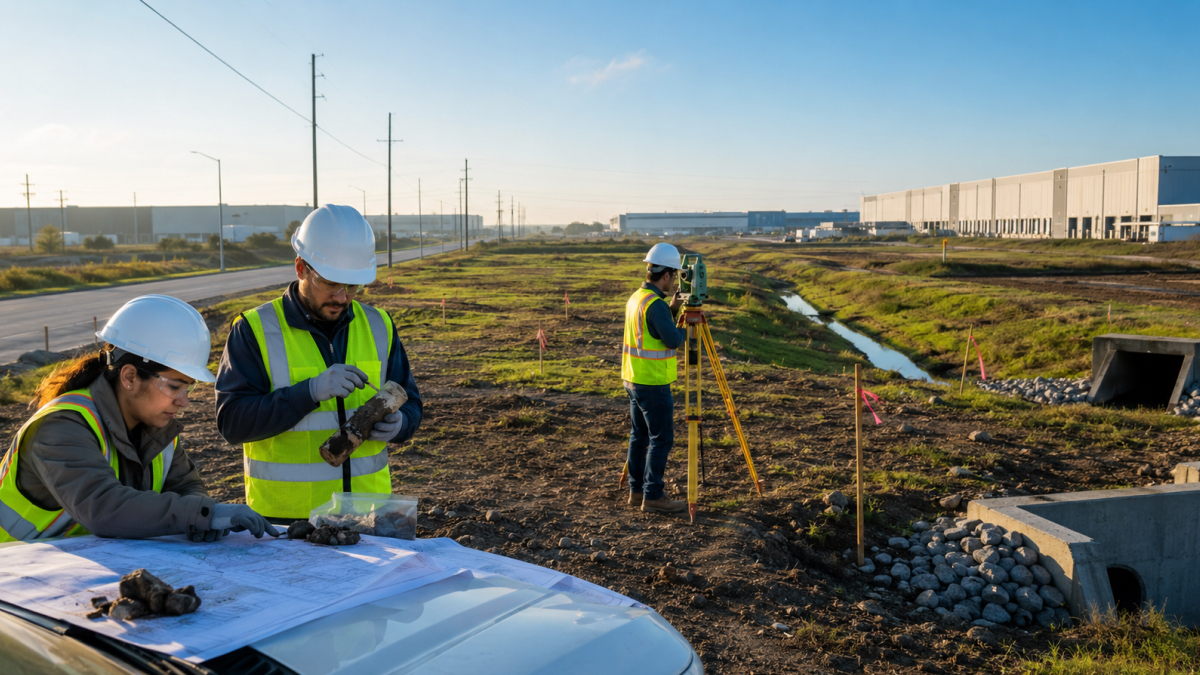
Due diligence before buying industrial land means working through a set of legal, physical and environmental checks before you sign, so you know exactly what you are buying and what risks come with it. At a minimum this covers a title search, confirming the zoning and permitted use, checking for contamination and flood risk, and reviewing any easements or encroachments on the site. Skipping any of these can leave a buyer carrying a cost or a restriction they did not know existed until well after settlement.
The starting point is always the title. A title search confirms who actually owns the land, whether there are any registered encumbrances, and whether the seller has the legal right to sell it in the first place. From there, zoning and permitted use need to be checked properly, not assumed. A site might look perfectly suited to your business, but if the current use is technically non conforming under the local planning scheme, you could be limited in what you are allowed to do with it once the existing use changes, as outlined in this commercial property due diligence checklist that walks through the legal identity of a site before purchase. We work through this exact process as part of every acquisition we make, which is one of the reasons we manage that stage ourselves rather than outsourcing it.
Industrial sites carry a particular risk that a lot of buyers underestimate, which is contamination. If a site has previously been used for manufacturing, fuel storage, or any activity involving hazardous materials, that history can create a liability that transfers with ownership, regardless of who caused it. A proper environmental assessment, starting with a desktop review of the site’s history and moving to soil testing if anything looks concerning, is not optional for an industrial purchase, it is one of the more important steps in the whole process.
Flood risk deserves the same level of attention, particularly in parts of Queensland and northern NSW where overlays have shifted following recent flooding events. It is worth checking council flood mapping directly rather than relying on what a listing or an agent tells you, since flood classification affects insurance, financing, and long term value.
Beyond the obvious checks, a few things catch buyers out more often than they should. Easements can restrict how you use part of a site even though you technically own it, so it is worth understanding exactly what runs across a block before you commit to a layout or a build. Boundary encroachments, whether from a neighbouring fence, driveway or structure, are another common surprise. A detailed commercial lawyer’s due diligence checklist also flags GST and stamp duty treatment as something worth confirming before exchange, since getting this wrong can add an unexpected cost late in the process.
The cost of skipping due diligence rarely shows up straight away, which is part of why it is tempting to cut corners under time pressure. A contamination issue might not surface until you go to build or sell, at which point remediation costs can run into the hundreds of thousands of dollars. An easement you did not know about might only become a problem once you try to put a driveway or a loading area exactly where you planned. None of these issues are common, but when they do happen, they tend to happen to buyers who moved quickly without checking, rather than buyers who took the time to look properly.
Realistically, proper due diligence on an industrial site takes a few weeks rather than a few days, depending on how quickly reports come back from environmental consultants, surveyors and your solicitor. In a competitive market it can be tempting to rush this stage or skip parts of it to keep an offer attractive, but the better approach is to get as much of the work done early, ideally before you are locked into a contract, so you are negotiating from a position of actually knowing what you are buying.
Because we manage acquisition ourselves as part of every project we develop, we go through this exact process on every site before we commit to it. If you are buying industrial land and want a second opinion on what to check, or if you are looking at one of our own current projects and want to understand what due diligence has already been done on our end, get in touch with our team and we can walk you through it honestly.

Interested in one of SunnyDev's properties? This is the right place.
Simply complete the form below and one of our team will be in touch to assist you with your enquiry.