The Rising Demand for Strategic Industrial Developments in South-East Queensland
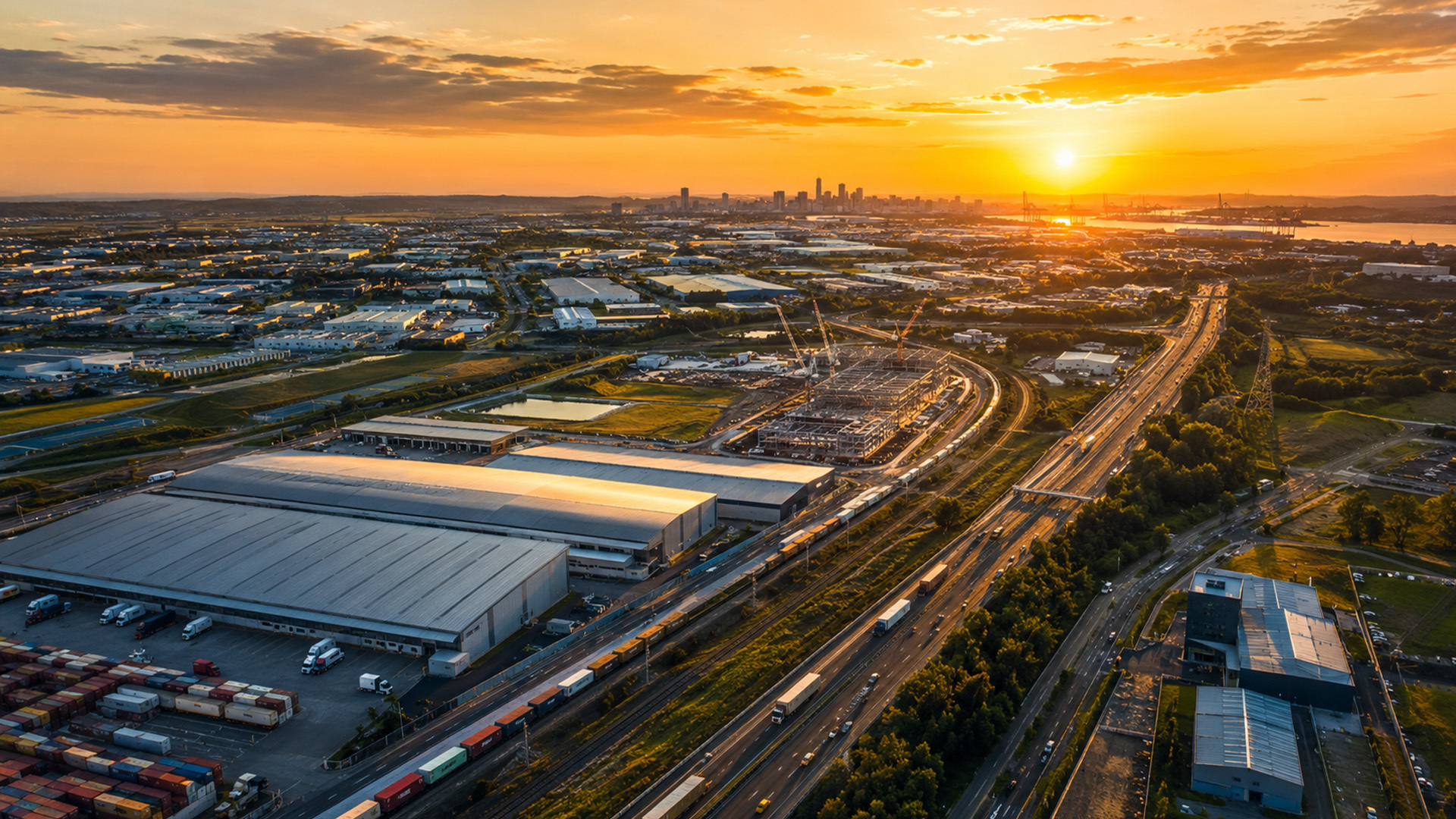
Something significant is happening across South-East Queensland’s industrial landscape and those paying attention are already positioning themselves to benefit. From Stapylton and Coomera to Tweed Heads South, the demand for well-located industrial space is accelerating, driven by a combination of macro-economic trends, infrastructure investment, and a fundamental shift in how goods are moved, stored, and distributed across the country.
For business owners, investors, and logistics operators, understanding the forces behind this growth and acting early could prove to be one of the shrewdest commercial decisions of the decade.
Australia’s e-commerce sector has grown dramatically over the past five years. Consumer expectations around delivery speed have tightened. Retailers and third-party logistics providers are under pressure to position fulfilment infrastructure closer to major population centres and South-East Queensland, with its rapidly growing residential base, sits squarely in the crosshairs.
The knock-on effect for industrial developments is direct: demand for modern, functional warehouse space near transport corridors is rising faster than new supply can come online. Industrial vacancy rates across the region have tightened considerably, putting upward pressure on rents and pushing businesses to secure space earlier in the development pipeline.
For operators waiting until a new estate is built before committing, the increasingly common reality is that they’ve already missed the best lots.
Strategic industrial developments aren’t just about square metres they’re about location relative to supply chains. The proximity of key SEQ industrial precincts to the Port of Brisbane and major motorway networks creates a logistics premium that is only growing.
Stapylton, Coomera, and the Tweed corridor offer compelling access to both the M1 motorway and northern NSW markets. For businesses running distribution networks or managing cross-border freight, these locations reduce dwell times, cut fuel costs, and provide a competitive advantage that inner-ring suburban alternatives simply can’t match.
As fuel costs remain volatile and supply chain efficiency becomes a boardroom priority, the strategic value of well-positioned industrial developments in these corridors is difficult to overstate.
The SEQ region is in the midst of one of its most significant infrastructure buildouts in decades. Road upgrades, the Cross River Rail project, the 2032 Olympic preparation pipeline, and expanding freight logistics infrastructure are all combining to make South-East Queensland more connected and more commercially viable than it has ever been.
New infrastructure doesn’t just improve amenity. It unlocks previously undervalued land, reduces travel times for freight, and increases the attractiveness of industrial precincts that sit within reach of key arterials. For developers and buyers who secure industrial space ahead of these upgrades completing, the capital appreciation potential is material.
One of the more compelling emerging nodes in the current cycle is Tweed Heads South. Positioned at the QLD/NSW border, it offers genuine dual-market appeal access to Gold Coast demand while benefiting from comparatively lower land values and lighter development competition than established SEQ precincts.
The area is attracting interest from logistics operators, trade businesses, and light manufacturing tenants who need proximity to both markets but can’t justify the price premium of established industrial estates further north. For developers active in this corridor, early-mover advantage is very much still on the table.
Coomera sits at the centre of one of the fastest-growing residential and commercial corridors in Queensland. Population growth in the Coomera and Ormeau area has been extraordinary over the past decade, and the commercial infrastructure servicing that population is still catching up.
This creates a genuine undersupply dynamic for local-serving industrial tenants trade businesses, builders’ merchants, electrical contractors, and similar operators who need to be close to the residential construction boom. Industrial developments in Coomera aren’t just strategic on a logistics level; they’re positioned to capture demand from the local economy itself.
One of the consistent lessons from past industrial development cycles is that businesses and investors who move during the planning and construction phases outperform those who wait for completion. The reasons are straightforward: pre-construction purchase prices are typically more competitive, there is greater choice of unit size and configuration, and the buyer benefits from any capital appreciation that occurs between commitment and settlement.
As industrial developments across South-East Queensland continue to be absorbed quickly upon completion, the window to secure premium space at optimal pricing is narrowing. For those actively looking to relocate, expand, or invest in industrial property in the SEQ and northern NSW corridor, the time to engage is before the slab is poured, not after the signage goes up.
South-East Queensland’s industrial development story is not speculative, it’s already unfolding. The macro forces are aligned: population growth, e-commerce demand, infrastructure investment, port-adjacent logistics corridors, and a constrained supply of quality stock. The businesses and investors who understand these dynamics and act decisively are the ones who will look back on this period as one of the best opportunities the region has offered.
For those exploring industrial developments in Stapylton, Coomera, Tweed Heads South, and surrounding precincts, the conversation is worth having sooner rather than later.

Interested in one of SunnyDev's properties? This is the right place.
Simply complete the form below and one of our team will be in touch to assist you with your enquiry.