Queensland’s New Land Acquisition Powers: What Industrial Land Owners Need to Know
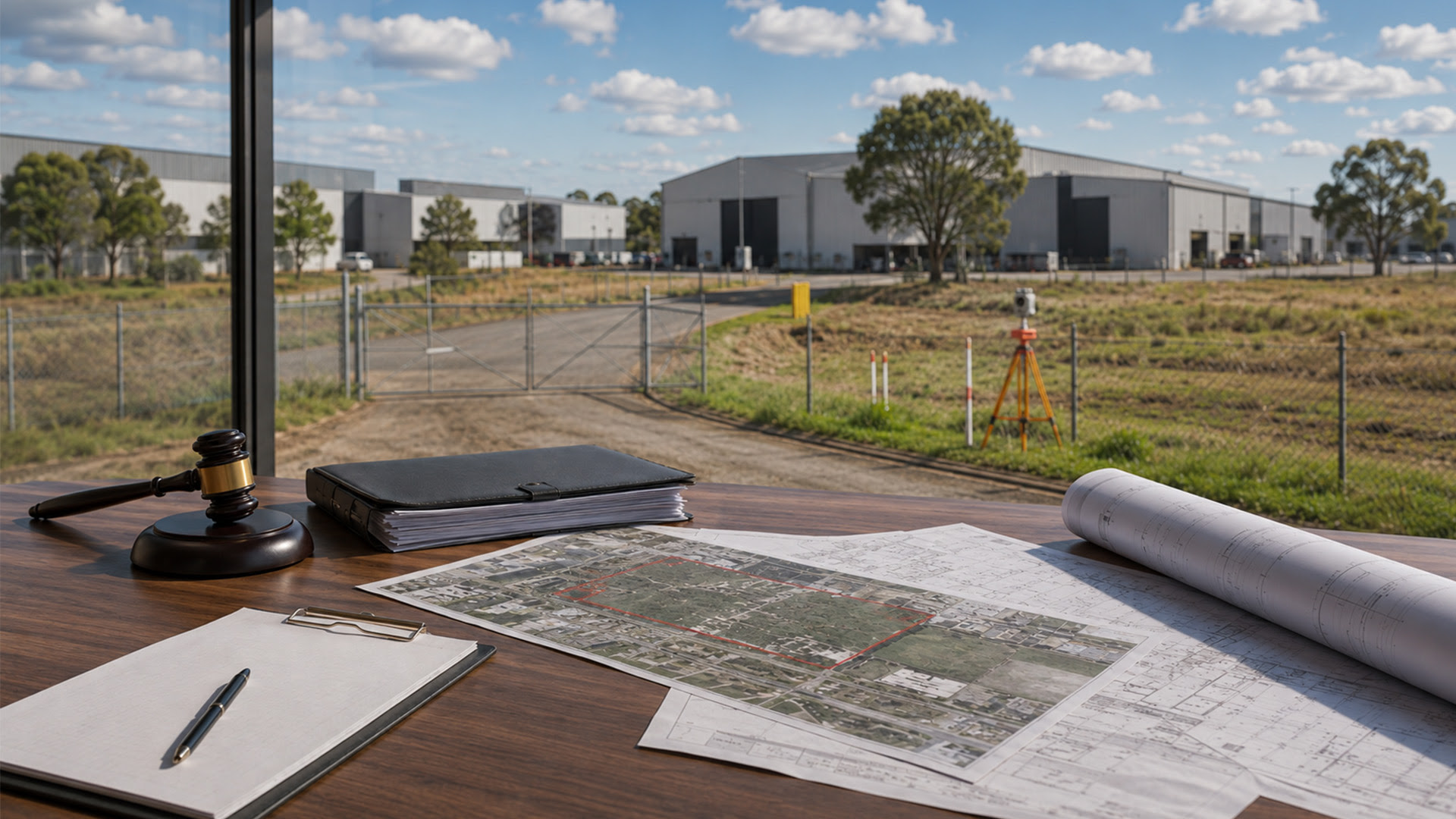
If you own or are looking to buy industrial land in Queensland, perhaps somewhere near one of our own current developments across South East Queensland, particularly anywhere near a designated growth corridor or major infrastructure precinct, it is worth knowing that the rules around government land acquisition are shifting. A bill introduced into Queensland Parliament in June 2026 creates a new category of major project with broader powers than anything currently on the books, including expanded compulsory acquisition rights. For anyone active in commercial real estate across the state, this is one to watch rather than one to worry about, but it is worth understanding properly.
The bill sits inside the State Development and Public Works Organisation (Critical Minerals) and Other Legislation Amendment Bill 2026, and its centrepiece is a new development category called a State Strategic Project. This replaces the existing critical infrastructure project designation that has applied to major developments in the past.
Under the new framework, the Minister for State Development can declare a project as a State Strategic Project where it is considered critical, essential or a high priority for the state. According to the Queensland Government’s own announcement, the intent is to fast track critical minerals projects and other developments of state significance, streamlining regulatory pathways and improving investment certainty. While critical minerals are the headline, the powers are written broadly enough to reach other sectors too, including industrial and infrastructure projects.
Once a project has State Strategic Project status, it gains access to a suite of powers that ordinary projects do not have. The most significant of these is expanded compulsory acquisition, sometimes still referred to as land resumption, which would be available to help deliver the project subject to approval by the Governor in Council. In practice, this means the state can move to acquire land it decides is necessary for a strategic project more readily than under existing arrangements.
The bill also introduces enabling works, which are limited activities a project proponent can seek authority to carry out where land access cannot be secured by agreement with the owner. These works are meant to be minor and temporary, and are not supposed to unreasonably interfere with how the owner uses their land in the meantime.
This is naturally the part that concerns landowners most, and it is a fair question to ask. Merits review and appeals to the Planning and Environment Court are limited for decisions relating to these top tier projects, which is a genuine narrowing compared to how most planning decisions can currently be challenged. For a closer look at what this means in practice, The Good Builder has put together a detailed breakdown aimed at builders, developers and landowners.
That said, it is not a complete removal of rights. Judicial review under the Judicial Review Act remains available, as does access to the Land Court for compensation matters. So while the avenue for contesting the underlying decision is narrower, landowners still have a path to ensure fair compensation if their land is acquired.
As of the middle of 2026, this is a bill, not yet law. It has been referred to a parliamentary committee for detailed consideration, with public submissions and a reporting date expected in August. That gives time for the detail to be shaped further before anything commences, and it is worth keeping an eye on how the committee stage plays out if you have industrial land in a location that could plausibly attract this kind of designation.
For most owners and investors in industrial land across Queensland, this is genuinely a watch this space situation rather than cause for alarm. The powers are aimed squarely at unlocking major projects the state considers strategically important, not at routine commercial or industrial transactions. But if your site sits near an infrastructure corridor, a critical minerals region or an area the state has flagged as a growth priority, it is worth understanding what a designation could mean for your options down the track.
We keep across changes like this as a normal part of how we operate across Queensland and New South Wales, because land and planning risk is something every buyer and landowner should have visibility on before they commit to a site. If you are weighing up a purchase or want to talk through how a growth corridor designation might affect a parcel of land you already hold, get in touch with our team and we can point you toward the right advice.
This article is general information only and is not legal advice. Landowners affected by an acquisition or land access decision should seek independent legal advice about their specific circumstances.

Interested in one of SunnyDev's properties? This is the right place.
Simply complete the form below and one of our team will be in touch to assist you with your enquiry.